
Heating specification
Provide diameter, overall and heated lengths, bore fit, voltage, wattage and lead arrangement. Describe the heated part and the operating cycle so the heater and sensing design can be reviewed together.
INDUSTRIAL COMPONENTS · CUSTOM SPECIFICATIONS
A cartridge heater with an integrated thermocouple combines heating and a temperature-feedback junction in one assembly. The junction may sense a different temperature from the workpiece; its type, position and electrical isolation must match the control design.
Provide diameter, overall and heated lengths, bore fit, voltage, wattage and lead arrangement. Describe the heated part and the operating cycle so the heater and sensing design can be reviewed together.
Mark the required thermocouple junction position on the drawing. State the grounded or ungrounded requirement and whether the control objective is heater temperature or the temperature at a defined point in the workpiece.
Identify thermocouple type, controller input, polarity, extension cable and connector. Keep the heater power circuit and sensor connection clearly identified in the assembly documentation.
Only one selected listing explicitly identifies Type K; other listings require the thermocouple type to be confirmed. Integral sensing does not establish workpiece accuracy, electrical isolation or independent overtemperature protection.
COMPARE EXISTING CONFIGURATIONS
A cartridge heater with thermocouple combines heating and sensing in one assembly. It still requires a compatible external control system and a defined measuring-junction location.
| Selection | What to specify | View catalog configurations |
|---|---|---|
| General integrated sensing | Define heater dimensions and the required sensor designation. | |
| Type K named configuration | Match Type K polarity, measuring point and instrument input. | |
| Built-in or internal junction | Dimension the junction and explain the control objective at the workpiece. | |
| 220 V stainless-steel reference | Specify the sheath grade, power, geometry and thermocouple type. |
Send the selected catalog reference with your drawing and operating requirements. Final construction, ratings and availability are agreed in the quotation.
CATALOG CONFIGURATIONS
These 6 selected configurations are a starting point for specification review. Confirm the exact construction, ratings and availability in your quotation.
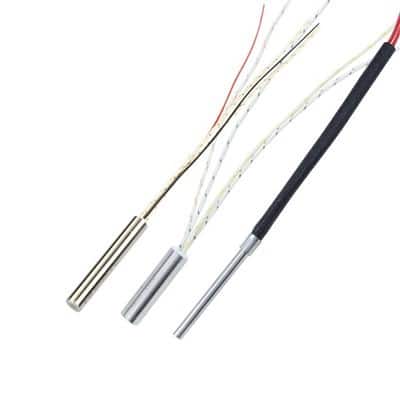
Review the configuration and confirm your required specification.
View product →
Review the configuration and confirm your required specification.
View product →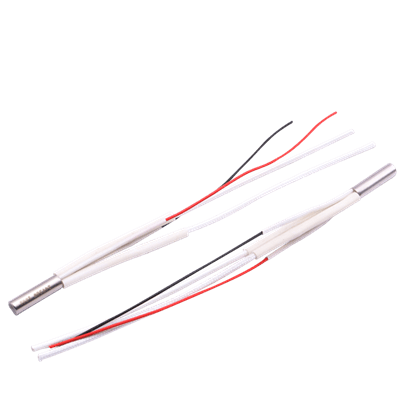
Review the configuration and confirm your required specification.
View product →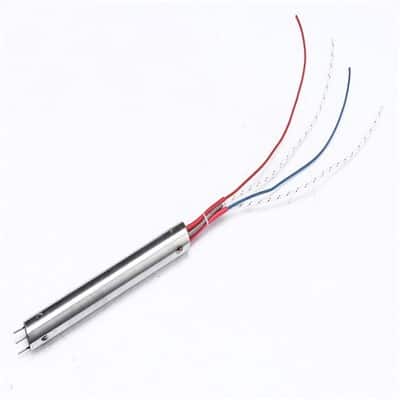
Review the configuration and confirm your required specification.
View product →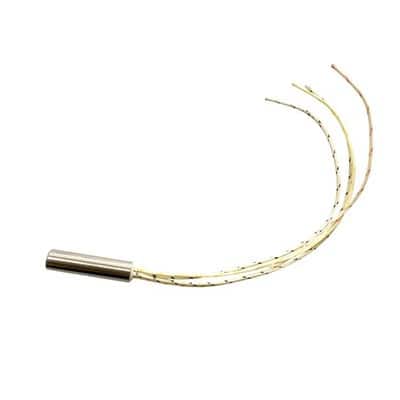
Review the configuration and confirm your required specification.
View product →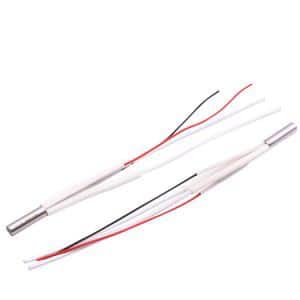
Review the configuration and confirm your required specification.
View product →SPECIFICATION QUESTIONS
No. Confirm the type and its compatible instrument input in the quotation. A generic cartridge-with-thermocouple title does not define the thermocouple alloy or wiring.
It measures at its junction location, which may be within the heater. Contact, thermal gradients and junction position influence the relation to the part temperature; verify the control objective in the installed assembly.
Show heater dimensions, heated and cold sections, junction position, thermocouple type, isolation requirement, lead identification, connector and instrument input, in addition to voltage and power.
ENGINEERING QUOTATION
Share what you know now; missing details can be discussed with our team. A drawing or photo can be attached after your WhatsApp or email app opens.
Preparing a message opens your own WhatsApp or email app. You decide whether to send it.